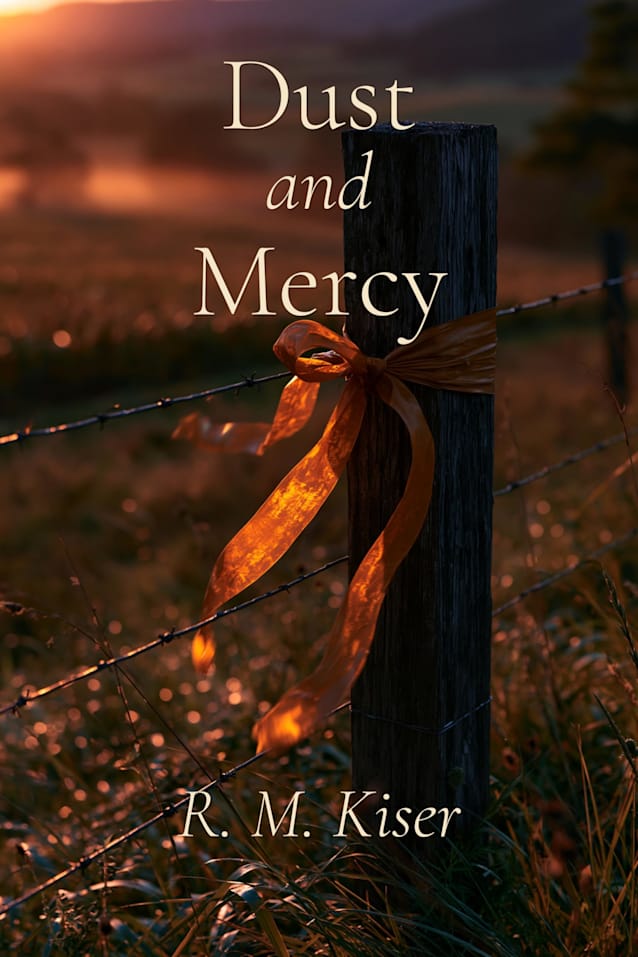
Dust and Mercy
About
Set in a 1959 Appalachian valley, Dust and Mercy follows Eli McKinnon, a third-generation farmer whose quiet stewardship of inherited land is disrupted when a boundary dispute and the roadside beating of an itinerant laborer named Lester Combs force his tight-knit community into a reckoning. The valley’s response to both crises reveals the distance between the Christian neighborliness its inhabitants publicly profess and the social architecture they have quietly constructed to avoid its costs. When Eli mounts a legal defense of his land and accepts the help of marginal community member Cass Redfield, the solidarity Hollow Ridge has long mistaken for Christian unity begins to fracture.
R. M. Kiser works in the tradition of morally serious American rural fiction, using landscape, community silence, and inherited religious language as active narrative forces. This is a slow-burn novel that does not resolve its central ethical tensions cheaply — not a story about simple hypocrisy, but about the quiet arrangements that allow good people to maintain enormous distances from the obligations they sincerely believe they hold.
For readers of Gilead by Marilynne Robinson, Demon Copperhead by Barbara Kingsolver, and The Kentuckians by Janice Holt Giles.